IPMX - IP Media Experience

What Is IPMX, and Why Could It Change AV over IP?

The broadcast industry spent the better part of a decade converging on ST 2110 and NMOS as the open standards for professional media over IP. The Pro AV industry - corporate, higher education, live events, hospitality, digital signage - has been having a parallel conversation, mostly in private, and mostly arriving at proprietary conclusions. SDVoE, Dante AV, NDI, AVoIP chipset ecosystems from various manufacturers: each solves the AV distribution problem, none of them solve it in the same way, and none of them interoperate with each other or with broadcast infrastructure. If you have ever tried to connect a corporate AV system to a broadcast facility, or route signal between a proprietary HDMI-over-IP encoder and an ST 2110 infrastructure, you will understand the problem immediately. ...

April 11, 2026 · Matt Thomas
NMOS IS-08 Audio Channel Mapping

NMOS IS-08: Audio Channel Mapping

IS-05 handles making the connection between a sender and a receiver. Once that connection exists, a multi-channel audio flow is arriving at the receiver - but which channels end up on which outputs is a separate question, and IS-05 has nothing to say about it. That is the gap IS-08 fills. It is the NMOS specification for audio channel mapping: a standardised API for controlling how the audio channels within a received flow are routed to the physical or logical output pins of a device. ...

April 6, 2026 · Matt Thomas
NMOS - Networked Media Open Specifications

What is NMOS, and Why Does It Matter for AoIP?

One of the things I find interesting about the broadcast industry’s move to IP is how the conversation tends to focus on transport. Ravenna, AES67, ST 2110 - these are protocols for moving media across a network, and they’ve matured significantly over the last decade. But transport is only part of the picture. Once you have dozens or hundreds of IP devices on a network, you need answers to some fairly fundamental questions. How do applications know what devices are available? How do you make a connection between a sender and a receiver? How do you change that connection, and when does the change take effect? ...

March 29, 2026 · Matt Thomas
MXL - Media eXchange Layer

What is MXL, and Why Does It Matter for Broadcast Audio?

When we talk about audio over IP in broadcast, the conversation almost always centres on network transport. How do we get audio from A to B over an IP network? That’s where Ravenna, AES67, Dante, and MADI-over-IP live. It’s an important problem, and the industry has largely solved it. But there’s a different problem that gets less attention: once audio arrives inside a software-defined or cloud-based facility, how does it move efficiently between applications? How does one process hand audio to the next without creating a bottleneck? ...

March 29, 2026 · Matt Thomas
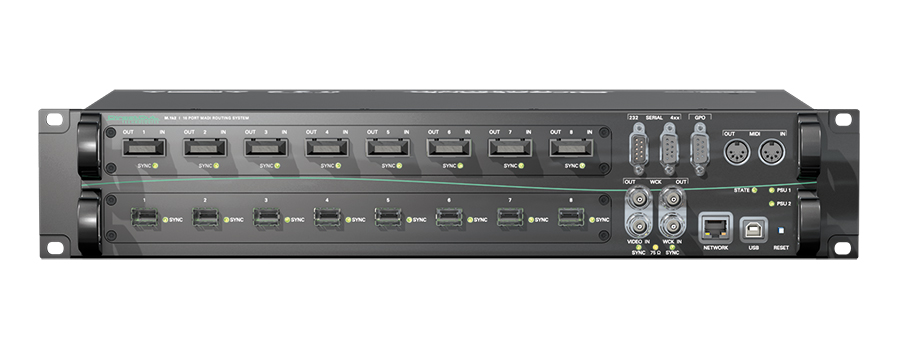
DirectOut Technologies MADI Routing System

Why MADI Still Matters

The audio world has its own version of the IP debate, and if you’ve spent any time around broadcast engineers in the last few years, you’ll have heard it. MADI is old technology. AoIP is the future. Dante, Ravenna, AES67 - that’s where everything is heading, and anyone still specifying MADI is stuck in the past. I’ve heard this argument a lot. I’ve also spent years working with both technologies at major live events, and my view is considerably more nuanced. ...

March 28, 2026 · Matt Thomas