GLITS & BLITS Generator

GLITS & BLITS Generator

GLITS and BLITS are two broadcast-standard test tone sequences that most audio engineers have encountered but few have had a convenient way to generate from scratch. GLITS - Group Line-up and Identification Tone Sequence - is the BBC/EBU stereo alignment standard. It runs as a 4-second cycle of 1 kHz tone at -18 dBFS on both channels, with timed interruptions on each channel in turn to identify left and right. It is the tone you hear at the top of a contribution feed or at the start of a tape, and it tells you the line is up, the levels are correct, and the channels are the right way round. ...

April 26, 2026 · Matt Thomas

IGMP in Broadcast Media Networks

ST 2110 and AES67 both depend on IP multicast. A single uncompressed HD video stream can consume 3 Gbps. A facility running dozens of simultaneous video and audio flows, all as multicast, needs a mechanism for ensuring those streams only reach the switches and devices that actually need them. Without that mechanism, every multicast packet floods to every port on the network - which in a media facility would be catastrophic. ...

April 8, 2026 · Matt Thomas
NMOS IS-08 Audio Channel Mapping

NMOS IS-08: Audio Channel Mapping

IS-05 handles making the connection between a sender and a receiver. Once that connection exists, a multi-channel audio flow is arriving at the receiver - but which channels end up on which outputs is a separate question, and IS-05 has nothing to say about it. That is the gap IS-08 fills. It is the NMOS specification for audio channel mapping: a standardised API for controlling how the audio channels within a received flow are routed to the physical or logical output pins of a device. ...

April 6, 2026 · Matt Thomas
Media orchestration platform architecture diagram

Media Orchestration Platforms in IP Broadcast Facilities

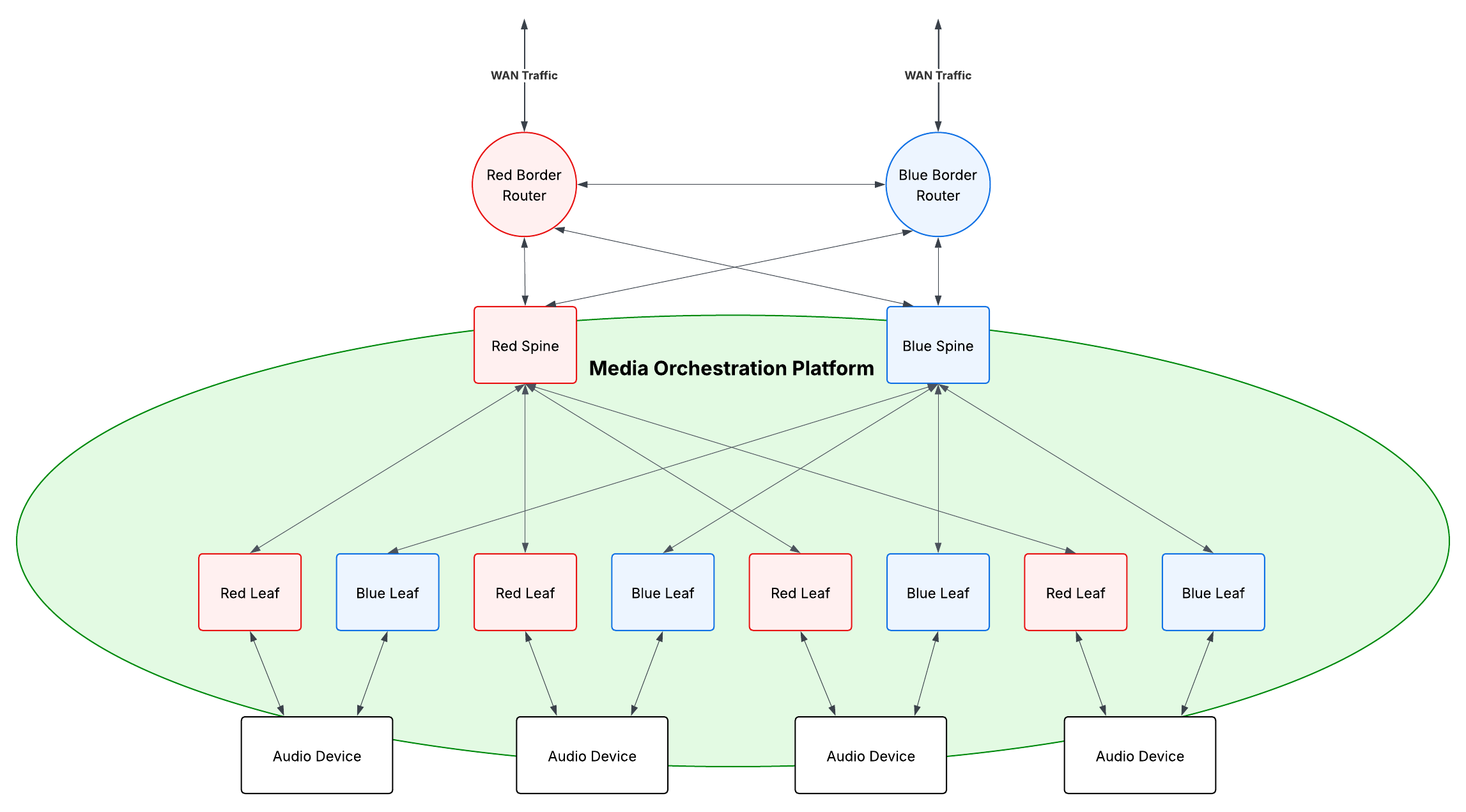
Building a spine-leaf ST 2110 network solves the transport problem. Signals can flow anywhere in the facility at the speed of light with predictable latency. What it does not solve is the control problem: how do operators actually route those signals, how does the system know what resources are available, and how does automation talk to the infrastructure in a consistent way regardless of which vendor made each device? That is what a media orchestration platform does. It is the software layer that sits above the network and provides a unified means of controlling everything connected to it. ...

April 5, 2026 · Matt Thomas
SSH

SSH Basics for Audio Engineers

If you spend any time working with Linux-based audio systems - streaming servers, audio consoles with embedded Linux systems, remote monitoring tools, or Raspberry Pi-based devices - you will eventually need to connect to them over SSH. Getting comfortable with key-based authentication makes that process faster, more secure, and less friction than typing a password every time. This is not a deep dive into cryptography. It is a practical reference for the commands you will actually use. ...

April 5, 2026 · Matt Thomas
Border router in a spine-leaf media network

The Role of a Border Router in Spine-Leaf Media Networks

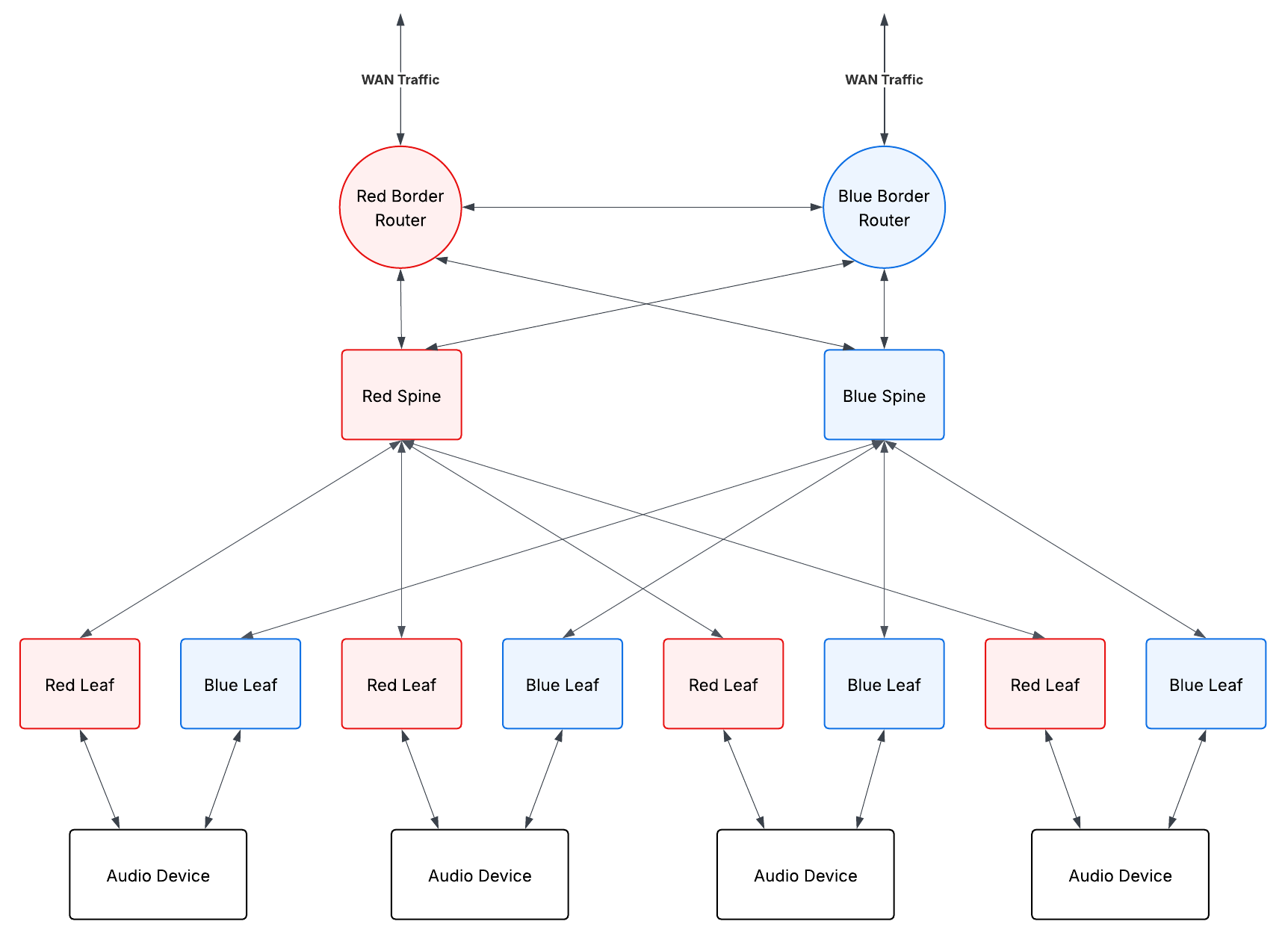
Spine-leaf has become the dominant topology for IP media networks in broadcast facilities, outside broadcast trucks, and stadium infrastructure. It is predictable, scalable, and well-suited to the low-latency, high-bandwidth demands of uncompressed media. But a spine-leaf fabric is, by design, a closed system. The border router is what connects it to everything else. Spine-Leaf in Brief In a spine-leaf topology, every leaf switch connects to every spine switch. There are no direct connections between leaf switches, and no direct connections between spine switches. Traffic between any two endpoints always takes the same number of hops - leaf to spine to leaf - which gives you consistent, predictable latency across the fabric. ...

April 5, 2026 · Matt Thomas
Comrex Fleet Dashboard

Comrex Fleet Dashboard - Monitoring a Fleet of Broadcast Audio Codecs

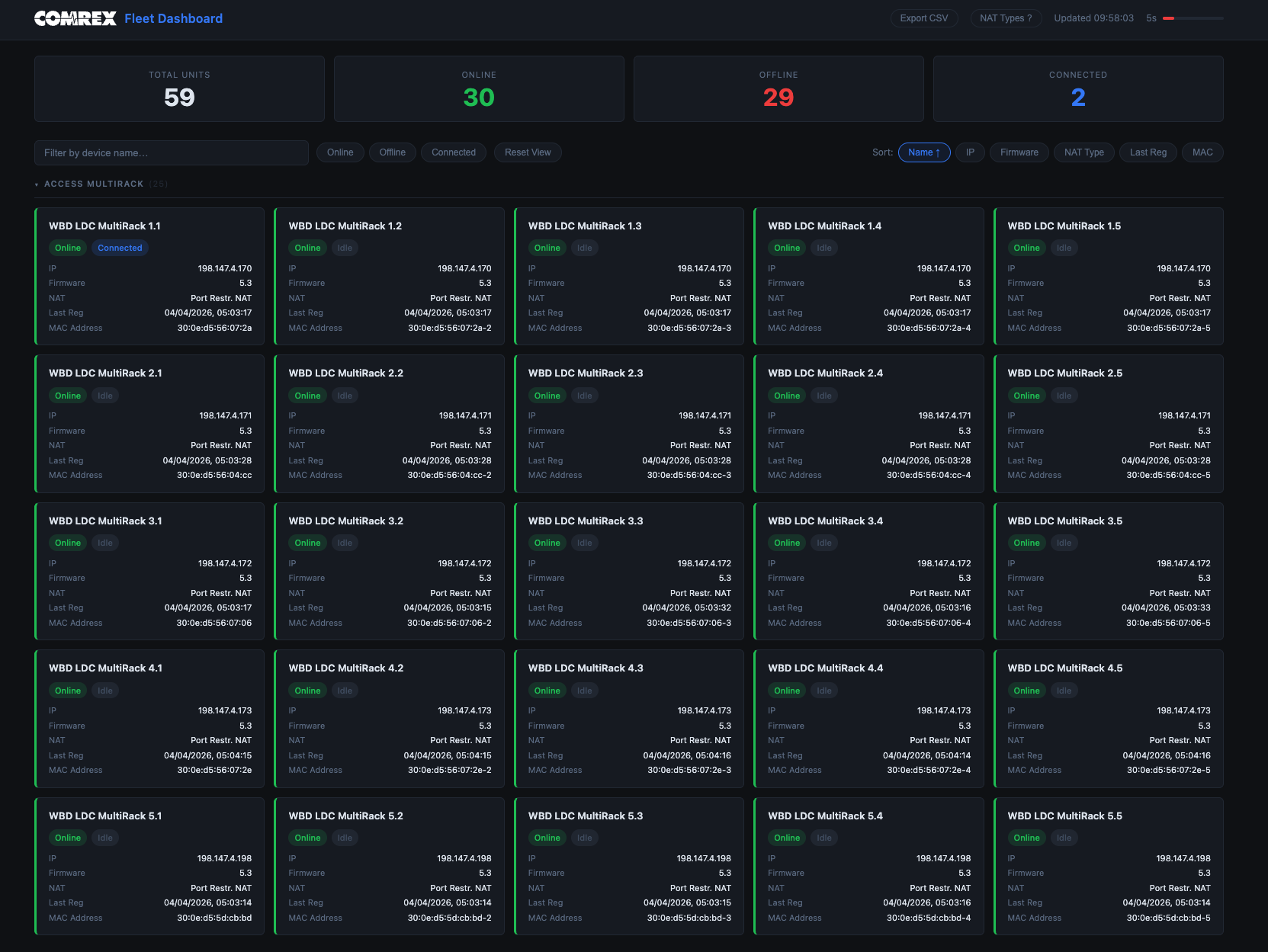
Anyone who manages a fleet of Comrex contribution codecs will know the problem. You have ACCESS MultiRack units in a broadcast centre, BRIC-Link devices at remote sites, ACCESS Portable NX units in the field - and keeping track of which ones are online, which are connected, and which have silently gone offline is a constant background task. Checking them individually through Switchboard is fine for one or two units. At scale it becomes friction. ...

April 3, 2026 · Matt Thomas
Git version control

Git Basics for Audio Engineers

Broadcast audio engineering has always involved a degree of systems thinking. Routing matrices, gain structures, signal flow - these are disciplines built around understanding how components interact and what happens when something changes. Software-defined workflows extend that thinking into a new domain, and with it comes a new category of things that can go wrong: a script that worked last week stops working, a configuration change breaks something, a colleague overwrites your work. ...

April 2, 2026 · Matt Thomas
Spine-leaf network topology diagram showing Red and Blue fabrics for ST 2022-7 redundancy

Spine-Leaf Network Topology in ST 2110 Broadcast Facilities

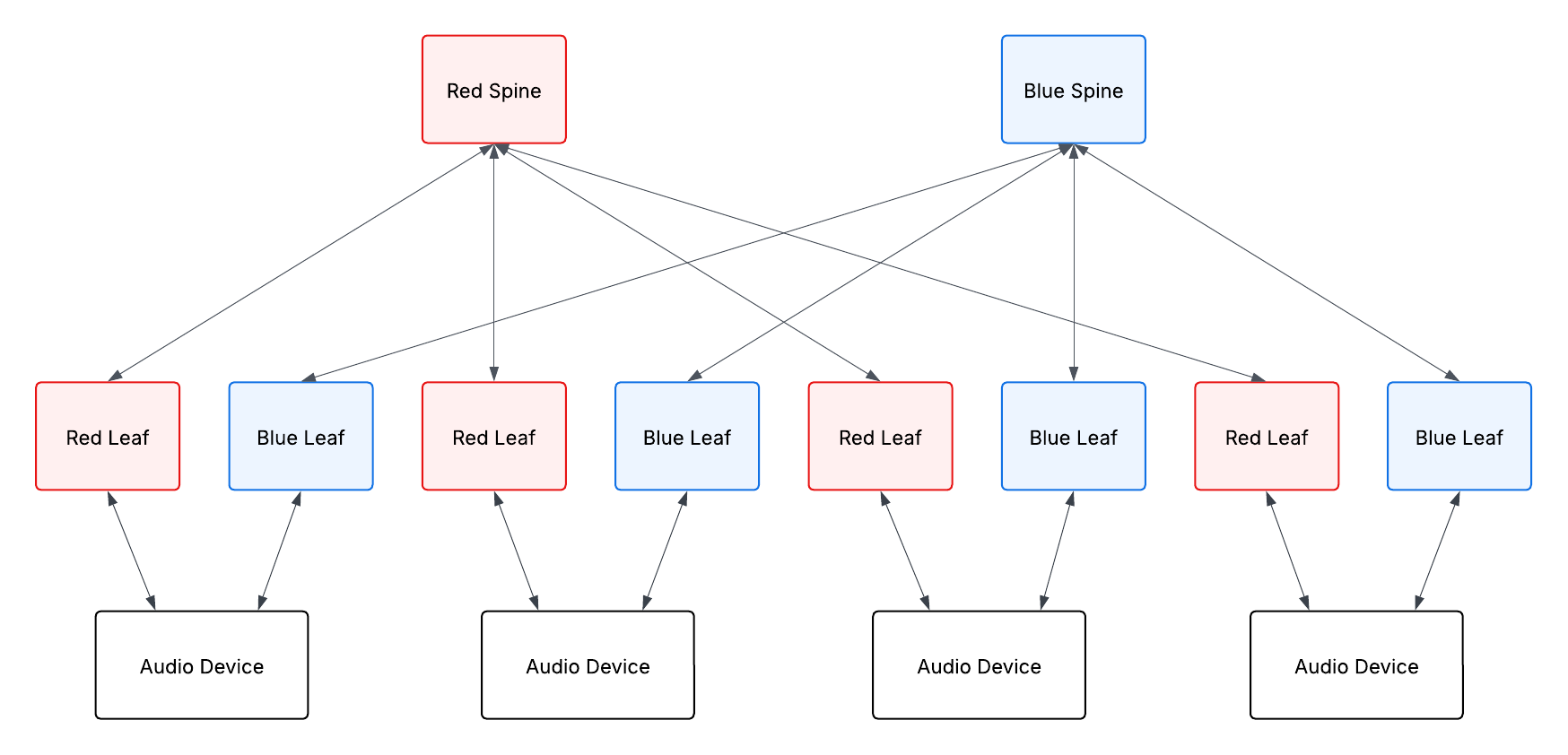
When a broadcast facility moves to ST 2110, the network stops being background infrastructure and becomes a core part of the signal path. The choice of network topology has direct consequences for latency, redundancy, scalability, and how well PTP and multicast behave. Spine-leaf has become the dominant architecture for serious ST 2110 deployments, and understanding why - and what it asks of you in return - is worth the time. ...

April 2, 2026 · Matt Thomas
ST 2022-7 dual redundant network path diagram - Red and Blue networks

SMPTE ST 2022-7 - Seamless Redundancy for IP Media

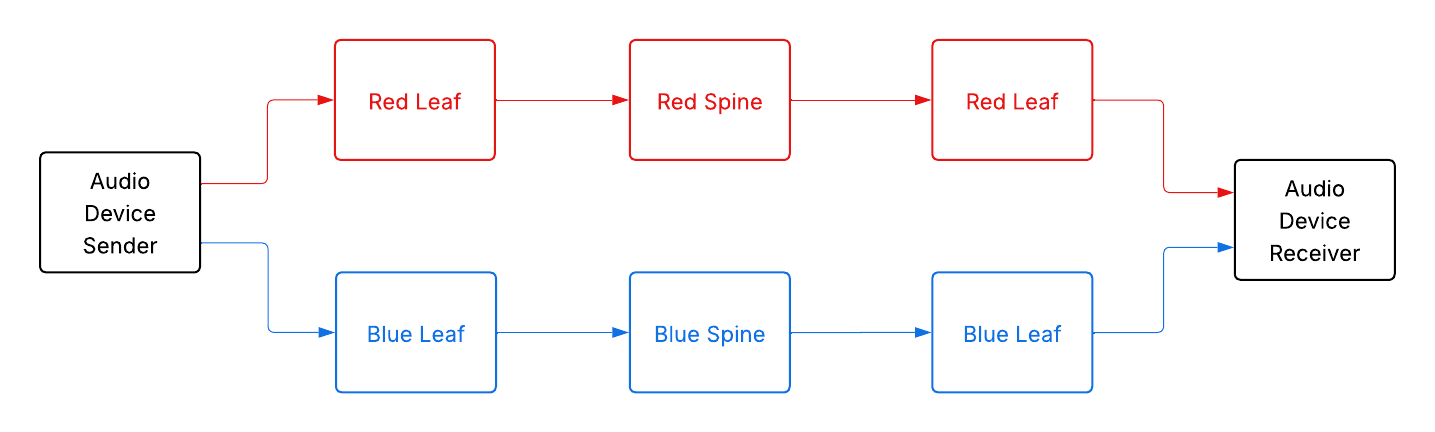
Broadcast infrastructure has always been built around redundancy. Dual power supplies, redundant signal paths, failover routing - the principle is the same everywhere: no single point of failure should take a show off air. When broadcast moved to IP, the question became how to achieve the same resilience on a packet network, where the failure modes are fundamentally different from SDI. SMPTE ST 2022-7 is the answer the industry settled on. It defines a scheme called Seamless Protection Switching, and understanding it is worthwhile for any engineer working with AES67, ST 2110, or IP contribution systems at a level above basic connectivity. ...

April 1, 2026 · Matt Thomas