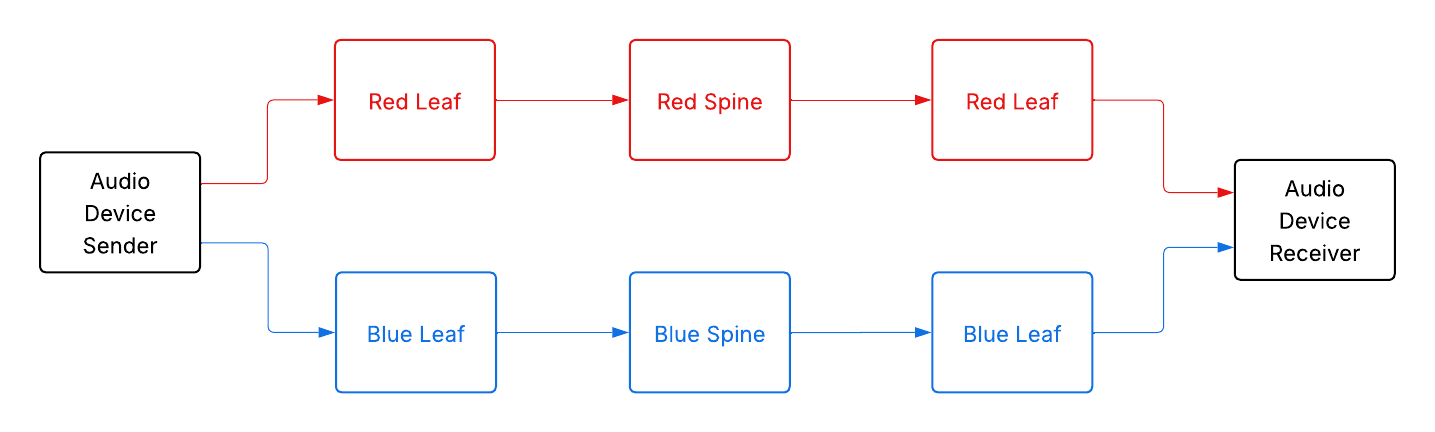
ST 2022-7 dual redundant network path diagram - Red and Blue networks

SMPTE ST 2022-7 - Seamless Redundancy for IP Media

Broadcast infrastructure has always been built around redundancy. Dual power supplies, redundant signal paths, failover routing - the principle is the same everywhere: no single point of failure should take a show off air. When broadcast moved to IP, the question became how to achieve the same resilience on a packet network, where the failure modes are fundamentally different from SDI. SMPTE ST 2022-7 is the answer the industry settled on. It defines a scheme called Seamless Protection Switching, and understanding it is worthwhile for any engineer working with AES67, ST 2110, or IP contribution systems at a level above basic connectivity. ...
April 1, 2026 · Matt Thomas
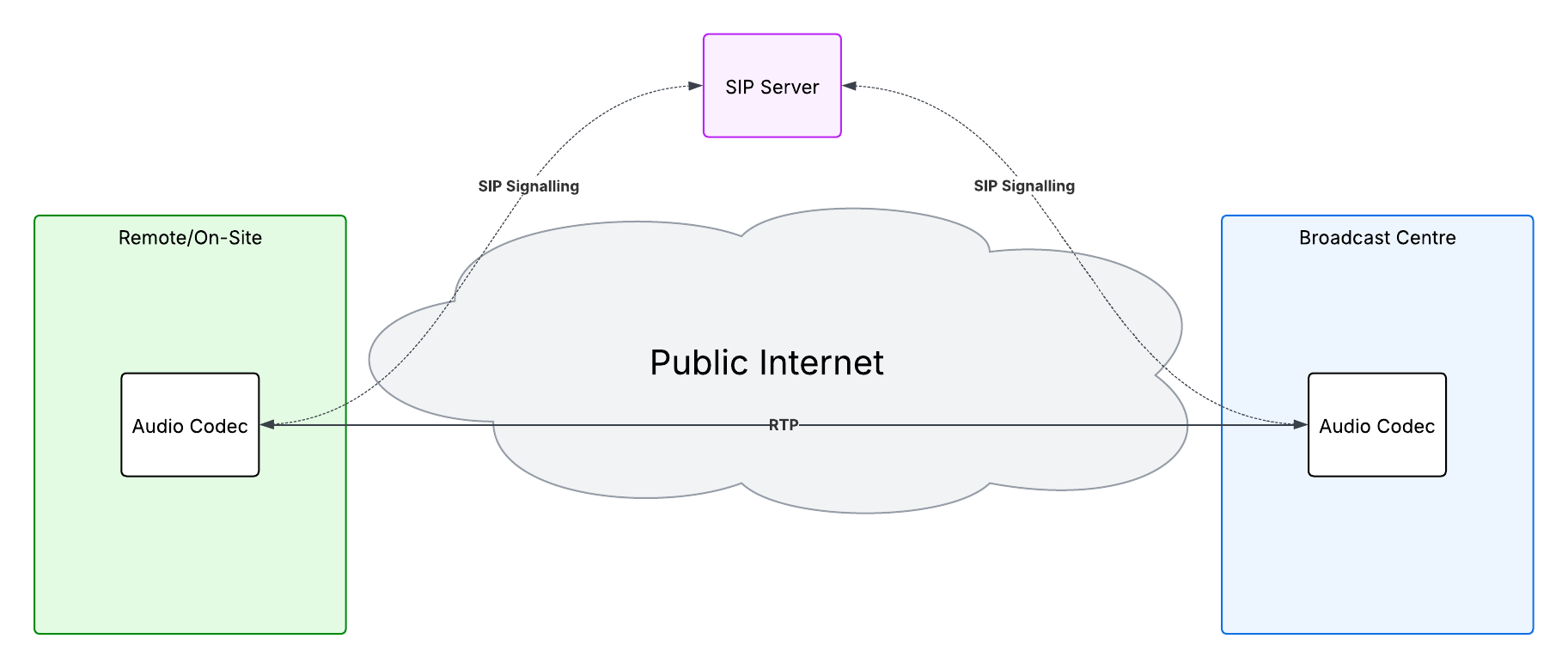
SIP architecture - remote codec connecting to broadcast centre via public internet

SIP in Broadcast Audio - Commentary and Coordination Circuits Over IP

For most of my career, getting a high-quality audio circuit to or from a remote location meant either booking an ISDN line or arranging a satellite or fibre contribution. ISDN was reliable, well-understood, and nearly universal in broadcast. It was also expensive, inflexible, and is now being switched off across much of the world. The replacement, in most cases, is SIP over IP. And while IP contribution codecs have been around for a long time, SIP as a standardised signalling layer has made a real difference to interoperability - particularly as broadcast facilities want to bring commentary and coordination circuits in from the public internet without needing to manage dedicated infrastructure at the remote end. ...

March 30, 2026 · Matt Thomas
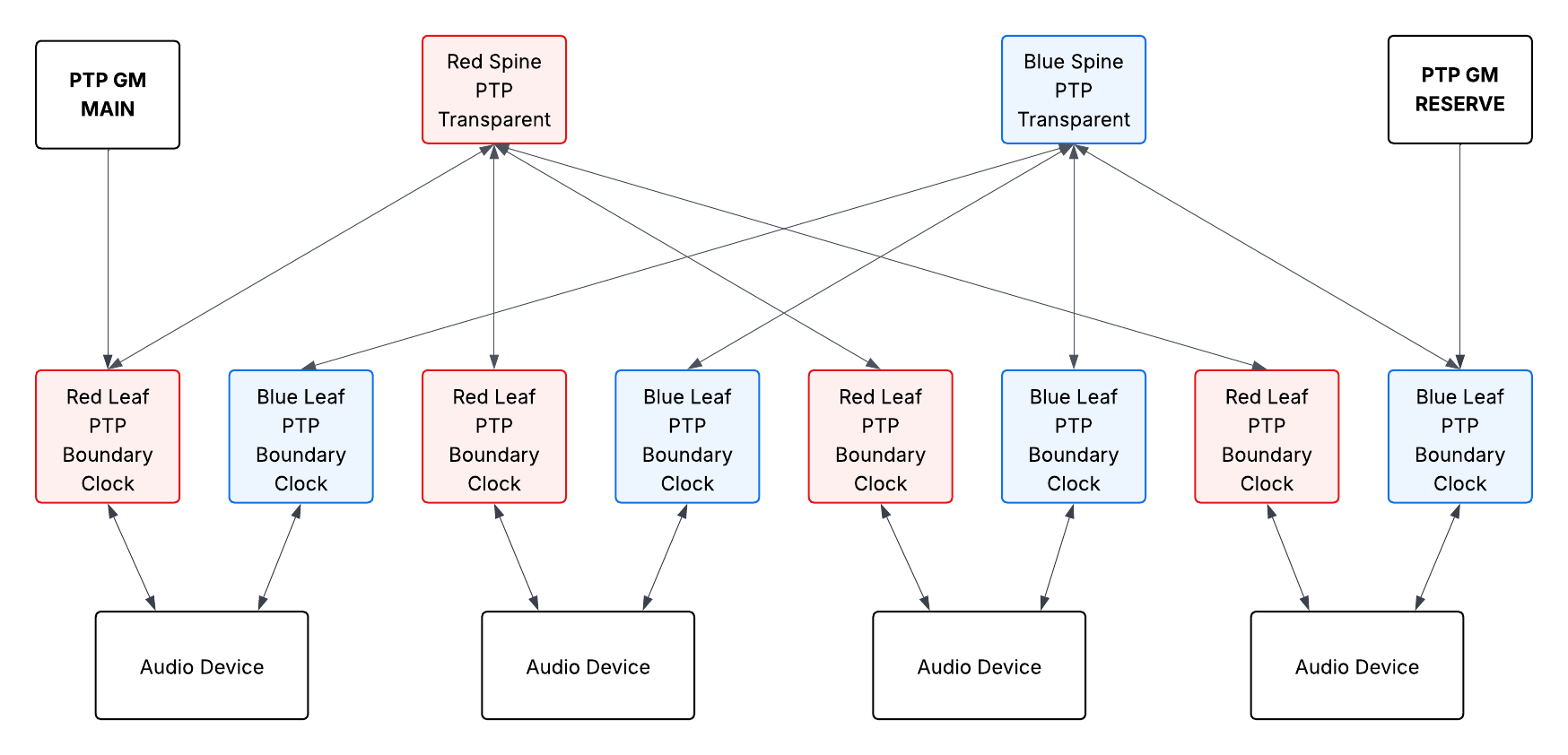
PTP grandmaster, transparent clocks and boundary clocks in a spine-leaf ST 2110 network

PTP in AVoIP - A Practical Guide for Audio Engineers

Of all the things that can go wrong in an AoIP system, PTP problems are among the most frustrating to diagnose. The audio often still plays - just with intermittent glitches, drift, or lip sync issues that are hard to reproduce and harder to pin down. Understanding what PTP is doing, and why, makes a significant difference when you’re standing in a broadcast centre an hour before air wondering why your streams are misbehaving. ...

March 29, 2026 · Matt Thomas

SDP Files in ST 2110 - What They Are and How They Work

If you’ve spent any time working with ST 2110 or AES67 systems, you’ve almost certainly encountered SDP files. They show up everywhere - in NMOS sender manifests, in device configuration interfaces, in Wireshark captures, and in the logs of things that aren’t working the way you expected. They look deceptively simple. They’re plain text. But getting them wrong causes problems that can be frustrating to diagnose, especially when the issue is something subtle like a mismatched packet time or an incorrect clock reference. ...

March 29, 2026 · Matt Thomas
NMOS - Networked Media Open Specifications

What is NMOS, and Why Does It Matter for AoIP?

One of the things I find interesting about the broadcast industry’s move to IP is how the conversation tends to focus on transport. Ravenna, AES67, ST 2110 - these are protocols for moving media across a network, and they’ve matured significantly over the last decade. But transport is only part of the picture. Once you have dozens or hundreds of IP devices on a network, you need answers to some fairly fundamental questions. How do applications know what devices are available? How do you make a connection between a sender and a receiver? How do you change that connection, and when does the change take effect? ...

March 29, 2026 · Matt Thomas
MXL - Media eXchange Layer

What is MXL, and Why Does It Matter for Broadcast Audio?

When we talk about audio over IP in broadcast, the conversation almost always centres on network transport. How do we get audio from A to B over an IP network? That’s where Ravenna, AES67, Dante, and MADI-over-IP live. It’s an important problem, and the industry has largely solved it. But there’s a different problem that gets less attention: once audio arrives inside a software-defined or cloud-based facility, how does it move efficiently between applications? How does one process hand audio to the next without creating a bottleneck? ...

March 29, 2026 · Matt Thomas
Ravenna AES67 & ST 2110

Ravenna Bandwidth Calculator

When planning temporary WAN services for major sports events, one question comes up again and again: how much bandwidth do our Ravenna audio streams need? Fibre connectivity is expensive, and over‑provisioning costs money. For years I used a basic Excel spreadsheet to estimate bandwidth — it worked, but it was slow to update, hard to share, and far from elegant. So I built something better. RavennaCalc is a clean, browser‑based bandwidth calculator for Ravenna/AES67 streams. It’s open‑source, takes seconds to use, and gives reliable estimates without the spreadsheet overhead. ...

February 27, 2026 · Matt Thomas

Why SDI Still Matters

Every year I go to a trade show and hear the same thing: SDI is dead, IP is the future, and anyone still running coax is holding back progress. I’ve been hearing this for the better part of a decade now. And yet, when I’m on-site at a major live event - wiring up comms systems, routing audio under pressure, troubleshooting at midnight before a show goes on air - SDI is still there, doing exactly what it’s always done. Quietly and reliably. ...

January 24, 2026 · Matt Thomas